
Mental Health Moment: Marking Grief with Memorial Practices, Part 2

Last week, I shared how God welcomes and even commands ritual, rhythm, and remembrance —especially in seasons of loss and transition. From the Exodus to stacked stones along the Jordan to bereavement practices, the Bible shows us a God who understands that some moments are too much for our human experience to hold inside without some form of expression. (Read Part 1 here.)
 Why does God incorporate these rhythms and practices into our lives? Why does it feel so helpful and cathartic to participate in these memorial activities? It’s because God designed us with many layers and each has a place in our grief.
And he answered, “You shall love the Lord your God with all your heart and with all your soul and with all your strength and with all your mind, and your neighbor as yourself.” Luke 10:27 (see also 1 Cor 6:19-20, Heb 4:12)
In mental health language, humans are bio-psycho-emotional-social-spiritual beings. That’s a lot of terms. But basically it means what we already know: we are made up of bodies, minds, and emotions, with the ability to relate to others and to have a spiritual life. Each of these domains asks to be tended to–to have a part in our days and in our stories. Part of our healing requires attuning to the multiple parts of ourselves.
In Part 1, I included many biblical examples of the rituals used during grief and transition. If you have the time go back and read through them again, taking note of:
- how all of the bodily senses were engaged in these ritual acts
- how relationships are included, and nurtured
- spirits and emotions also were tended to through prayer, music and poetry.
- minds were met through stories and acts of remembrance.
Where grief destabilizes, disorients and isolates us, healthy mourning practices create balance, stability, and connection between our various parts. Let’s take a look at how ritual serves our God-given design and creates space for connection with Him in our grief. I’ve illustrated with ideas shared from our own Hope Mommies community.
Calm Your Nervous System
The trauma of grief creates intense stress in our mental, emotional, and physical states, causing dysregulation and overwhelm. This form of acute stress makes it incredibly difficult to connect to God. But, He has provided His creation to help us recenter when life feels fractured. Simply going for a walk, listening to music, or utilizing our five senses (go outside, garden, stroke a pet, etc.) assures our nerves they don’t need to panic. By incorporating rhythmic and sensory activities in our life, we calm our nervous system, creating space for our minds and hearts to reconnect with God.
Contain Your Intense Emotions
Do you ever feel like if you give into your grief emotions, they may never stop? Grief has a way of feeling endless, formless and intrusive. Memorial practices offer a container for our pain and intense emotions, creating a set time and space to feel deeply. Lighting candles, visiting special places, and writing letters to our Hope Babies all signal “this matters” without allowing intense grief to commandeer our whole day. After my loss, I went on “prayer walks” (more like anger walks) and used that time to tell God about my confusion, anger, and despair. Having a set, contained time to tell Him my honest thoughts gave me assurance that I would not get uncontrollably swept up in my intense feelings. When my walk ended, so did the rant fest. I knew I could return to this practice anytime, which meant these feelings didn’t overflow into every area of my day.
Communicate Your Experience
Many times, words just don’t cut it. Yet our multi-dimensional beings need to communicate the depth of our experience. Using activity to express our grief journey externalizes our emotions without having to explain them. Art, ornaments, music (listening to or creating), dance, gardens, lighting candles, creating (quilts, memory boxes, collages) and simply weeping are just a few examples of how to use multiple senses and dimensions to communicate when words can’t.
Yet, sometimes words are exactly what we need to use to express our grief feelings. Upon William’s first birthday, I marked the event by starting a new blog, something that is healing for me. Some other examples of verbal processing are: writing letters to our babies or to our pre-loss selves, prayer journaling, songwriting, and sharing stories with others.
Continue Your Bond
William’s younger brother came in this morning and, with a long face, told me he missed William and wished he could eat breakfast muffins with us. Me, too, buddy. He’s never met William, but his soul feels William’s absence.
Because our Hope Babies were literally a part of us, our minds, souls and bodies yearn to be near them. Since we can’t literally hold our babies this side of heaven, how can we handle the void we feel? Physical objects can go a long way in helping us not only recognize the loss, but also honor the relationship. Objects of connection are more than just keepsakes; they give our grief a concrete place to land. Many of our Hope Moms cherish photos, items from the hospital, pregnancy tests and ultrasound images, vases, art and keepsakes, stuffed animals, Christmas stockings and special ornaments.
Tucked away in the book of Acts is a story about some widows grieving over their friend, Dorcas:
She was full of good works and acts of charity. In those days she became ill and died, and when they had washed her, they laid her in an upper room. … All the widows stood beside [Peter] weeping and showing tunics and other garments that Dorcas made while she was with them. (Acts 9:36-37, 39)
The women held onto Dorcas’ creations as they grieved her loss, probably while telling stories about the ways she blessed others and themselves (v. 36).
It’s important to remember that while these items are helpful in processing grief, they are just placeholders until we get to hold our children in the next life. As you yearn for your baby while holding your connection objects, take a moment to thank God that this isn’t the end of the story, and you will see them again.
Create Meaning
Loss tends to trigger big questions: Why did this happen? Who am I now? Where am I in my grief? Can I trust God? Sometimes these questions feel scary to ask aloud. Directly confronting big ideas like identity, belonging, and purpose can feel too intense upon the heels of loss. Since grief is ever evolving–and our world is ever hurrying–rituals are a gentle way to slowly and honestly create meaning, explore themes of faith, and wrestle with our questions without the pressure to come to a resolution.
Shortly after William’s death I received a letter in the mail that was addressed to “Mama Kelly”. That was the first time I saw my name associated with the role of mother–and it floored me. I keep it out as a reminder of the one who made me a mother. Other Hope Moms create meaning by choosing significant names for their babies, utilizing art and nature objects, visiting gravesites, scattering ashes, getting a haircut or tattoo, attending a baby shower for someone else, or serving other families and babies.
Connect with Others
Communal mourning practices are an ancient and worldwide practice for a reason: we were never meant to carry our grief alone. Events like funerals, the Wave of Light, vigils, balloon or butterfly releases, and Hope Mommies retreats remind us that our pain is shared, our loss is real, and our babies are loved. When your world feels broken, engaging in memorial practices with others can normalize grief reactions, strengthen social bonds, and provide opportunities to connect to the larger world.
As Christians, we also believe our grief is being redeemed by Jesus. We declare His power over loss by sharing our stories and our hope with the world around us. Rituals that serve others bring not only purpose to our loss but also tell a broken world that death does not have the final say. For example, many Hope Moms like to host Hope Box gatherings to supply their local hospitals; others provide refreshments for labor and delivery staff, assemble gifts for newborn babies that share their Hope Baby’s birthdays, or donate school supplies. These communal acts of remembrance and service remind us that our babies matter and are still having an impact.
Ritual, rhythm, and practices are available to help heal the multiple parts of ourselves. They are tools the Lord uses to revive us, ground us, and give us space to grow as we heal. What parts of yourself are needing attention in your grief journey right now? How has God given you objects and opportunities to express your grief?
Kelly
Hope Mom to William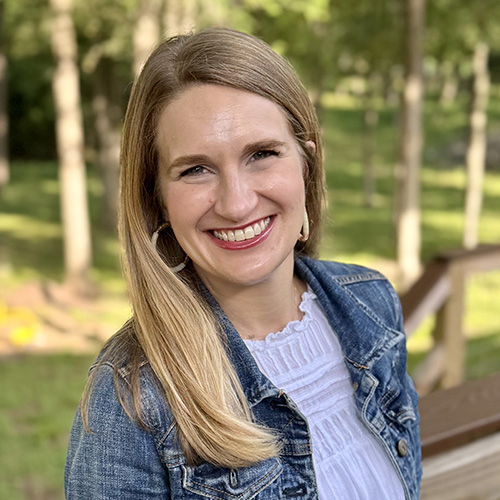 Kelly is the Ministry Support Lead for Hope Mommies. She and her husband Dan live in Brenham, TX with their two earthside children, Annabelle and Eli (and lots of pets). Their firstborn, William, went to Heaven in July 2017. To balance out the fullness of life, Kelly enjoys gardening, yoga, and sipping on some matcha while reading historical fiction. She considers herself beyond privileged to share the amazing news of Jesus’ Hope to all who need it, and loves that William gets to be a part of that message.

Got something to say?