
When Circumstances Don’t Match Our Faith

Isn’t God strange? He is so full of seeming paradoxes. He is all powerful and perfectly loving, yet allows evil to happen. He is everywhere all at once, but we often experience Him as distant and inactive. Our experience of God seems to contradict what He declares about Himself in Scripture.
Even the great King David wrestled with this seeming contradiction; his short but powerful poem in Psalm 13 gives us a glimpse of his raw despair and the seed of faith that carried him.
Psalm 13
How long, O Lord? Will you forget me forever?
How long will you hide your face from me?
How long must I take counsel in my soul
and have sorrow in my heart all the day?
How long shall my enemy be exalted over me?
Consider and answer me, O Lord my God;
light up my eyes, lest I sleep the sleep of death,
lest my enemy say, “I have prevailed over him,”
lest my foes rejoice because I am shaken.
But I have trusted in your steadfast love;
my heart shall rejoice in your salvation.
I will sing to the Lord,
because he has dealt bountifully with me.
While we don’t know the context of David’s anguish, we certainly can resonate with his expressed feelings: abandonment, oppression, sorrow, doubt, fear. He repeats the phrase “how long” four times, emphasizing the depth of his desperation for God to show up. The One who was his only hope was nowhere to be found, and his very life was in danger.
While you may not have experienced a true threat to your life like David, can you resonate with his bewilderment? God’s hiddenness tends to bring about questions that express doubt about His character and choices in our lives; God is not offended by our responses because they reveal a faith seeking to understand in the midst of pain. What can you honestly ask and complain about to God?
God, You say You care for me; how could You let this happen?
God, I need you. WHERE ARE YOU?
God, how much longer will I have to feel such pain? I can’t stand it.
While God certainly doesn’t often act the way we want or expect Him to, it’s helpful to know what we wish He would do. If God responded to your grief in your ideal way, what would that look like? Would He speak audibly to you? Send you a physical sign somehow? Warm your spirit anytime you asked? Send a specific person with a specific message? Based on his questions and requests in Psalm 13, David seems to wish that God would hurry to act, bind his enemies, bring David to a safe place, and make it very, very obvious that He is in charge.
David doesn’t record that his wishes came true (at least not before he ends his psalm). But he does change his tone, moving from questions and requests in verses 1-4 into confident declarations of God’s love, salvation, and generous dealings in verses 5-6. What happened between verses 4 and 5? Did David’s enemies up and leave? Did he struggle with an ancient version of schizophrenia? Did God give David a sign? I doubt all of these suggestions because David tends to end all his laments in a similar way.
David, the man with a heart after God, chose to trust God’s character even when his circumstances would strongly suggest otherwise. More specifically, David chose to trust God’s hesed (“steadfast/unfailing love”). Hesed is one of the most valued terms in the Jewish language to describe God’s covenant relationship with his people; this term embodies the choice of God to enter into unbreaking, forever relationship with us–not because of our greatness or lack thereof, but because of His love for us and his faithfulness to His own promises (Heb 6:13-20).
Even when death is at his door and the threats don’t abate, David trusts God’s beneficence towards him so soundly that he believes he will rejoice and that he will sing praises. This is the power of covenantal love. And it is the same love that sent Jesus to the Cross for you and your babies.
You’ve thought about what you would ask God and how you would like God to respond to your grief. To follow David’s wise pattern, we will end with a final question: What can you choose to believe about God’s character, even if your circumstances would argue otherwise?
No matter your circumstances, this God of David is the same God who made you and your babies, and He has not changed. His heart for you has not changed. He may be strange and make very unexpected choices. But nothing can get in the way of his hesed for you (Ro 8:31-39). Even if we don’t feel His love or presence, His grace gives us the power to choose to believe. This is faith.
Choosing to believe with you,
Kelly
Kelly
Hope Mom to William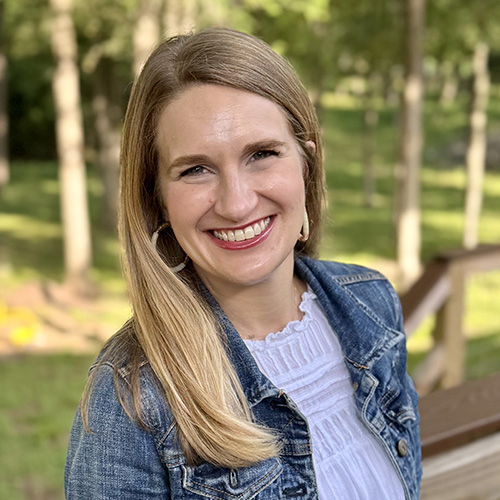 Kelly is the Ministry Support Lead for Hope Mommies. She and her husband Dan live in Brenham, TX with their two earthside children, Annabelle and Eli (and lots of pets). Their firstborn, William, went to Heaven in July 2017. To balance out the fullness of life, Kelly enjoys gardening, yoga, and sipping on some matcha while reading historical fiction. She considers herself beyond privileged to share the amazing news of Jesus’ Hope to all who need it, and loves that William gets to be a part of that message.

Got something to say?